Adam's Peak, or Sri Pada (Sacred Footprint), is a conical mountain rising 2,243 meters (7,359 ft) and is one of the most important pilgrimage sites in the world. It is sacred to followers of four major religions, all of whom believe the indentation at the summit marks the footprint of a holy figure.
A Mountain Sacred to Four Faiths
The mountain holds deep meaning across different religions:
- Buddhism: Believes the footprint belongs to the Buddha, made during his third visit to Sri Lanka.
- Hinduism: Recognizes the mark as the footprint of Lord Shiva (Shiva padam).
- Christianity/Islam: Followers believe the mark is the footprint of Adam, where he first set foot on Earth after being cast out of the Garden of Eden.
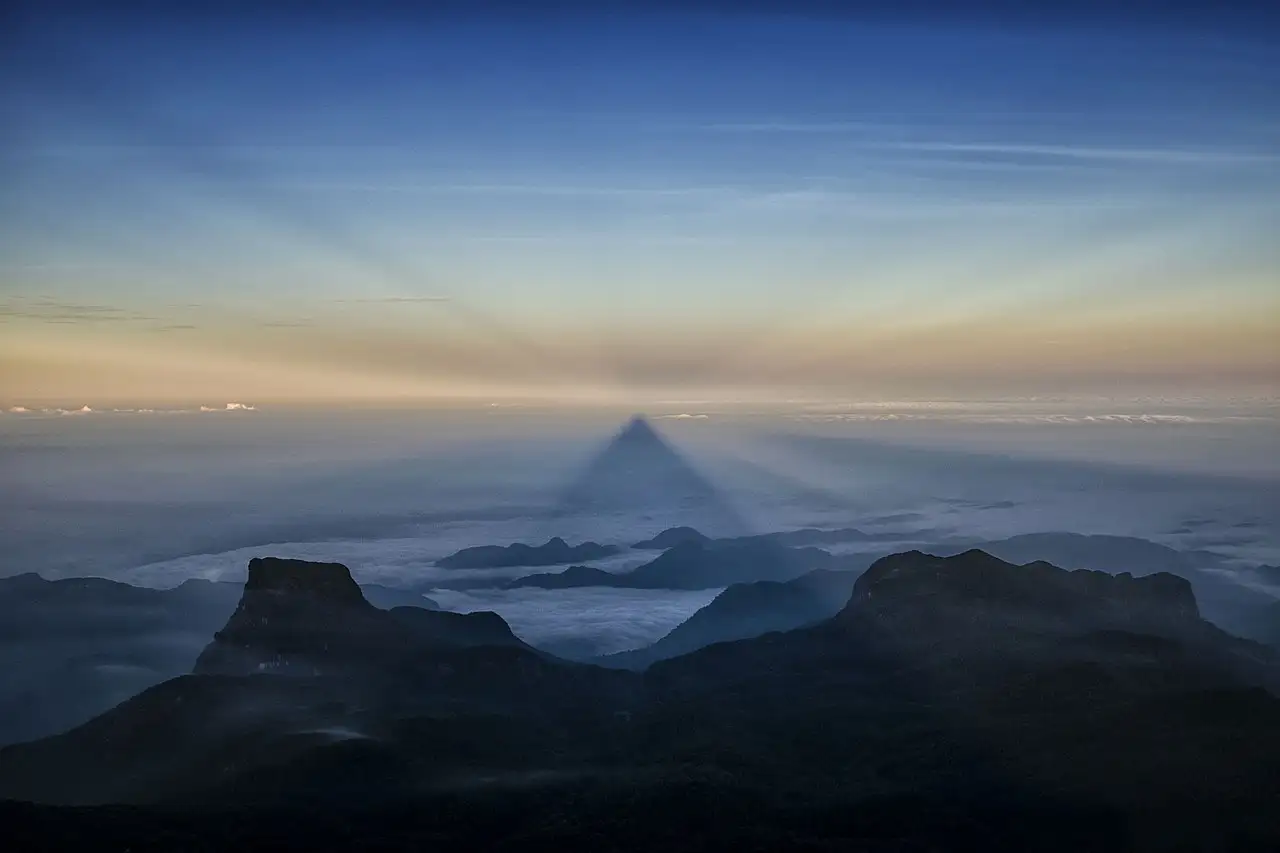
The famous triangular shadow cast by the peak on the clouds at dawn is known as 'Ira Sevaya'.
The Pilgrimage: Climbing Through the Night
The ascent involves climbing around 5,500 to 6,000 steps depending on the route (starting from Hatton or Ratnapura). Most travelers begin the hike between 2:00 AM and 3:00 AM to reach the summit just before sunrise. The trail is lit during the pilgrimage season and features small shops and tea stalls along the way. While the climb is physically demanding, especially the final steep section, the atmosphere created by the pilgrims is deeply spiritual and encouraging.
Sunrise and the Mystical Shadow
The goal of the nighttime climb is to witness the spectacular sunrise. As the sun rises, Adam's Peak casts a perfectly triangular shadow on the surrounding clouds and plains, an optical illusion known as 'Ira Sevaya' (Sun's Worship) or the Holy Shadow, which slowly diminishes as the sun climbs higher. This celestial event is considered a moment of profound spiritual importance.
Navigating the Seasons
The official pilgrimage season runs from the full moon of Poya Day in December to the full moon of Vesak in May. During this time, the path is illuminated and busy with pilgrims, offering the best experience. Outside this season, the path is dark, unprotected, and largely deserted, with a high risk of adverse weather, making the climb significantly more dangerous.
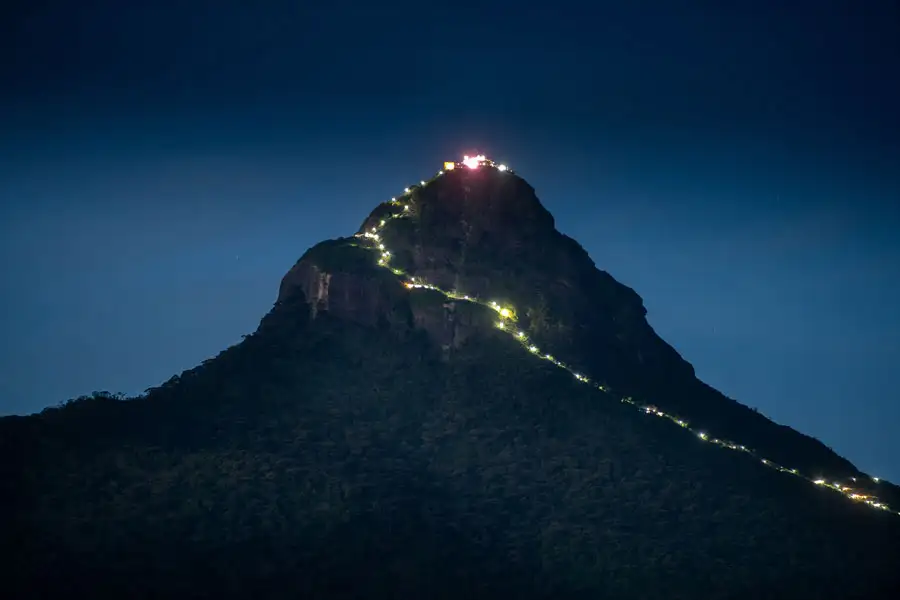
The long, steep staircase is illuminated during the pilgrimage season for safety.