Sigiriya, or 'Lion Rock,' is more than just a large column of rock; it is a masterpiece of ancient urban planning, engineering, and art. Built by the parricidal King Kashyapa (477 – 495 CE), this UNESCO World Heritage Site holds tales of betrayal, ambition, and extraordinary vision.
A King's Fortress in the Sky
The history of Sigiriya is tied to the dramatic life of King Kashyapa. After seizing the throne from his father, he feared retaliation from his half-brother, the rightful heir, Moggallana. Instead of strengthening the traditional capital, Anuradhapura, Kashyapa relocated his kingdom to this isolated rock mass, transforming it into an impregnable fortress and a lavish royal palace. The construction of the palace, gardens, and defensive structures in just seven years remains one of the most astonishing engineering feats of the ancient world.
The Gardens: Ancient Landscaping Masterpiece
Before you even begin the climb, you traverse the lower city, home to some of the world's oldest surviving landscaped gardens. The Gardens are famous for their ingenious hydraulic systems, still functioning after 1,500 years, which controlled water jets and fountains. The Gardens blend man-made architecture with natural rock formations, while the Terrace Gardens spiral up the base of the rock.
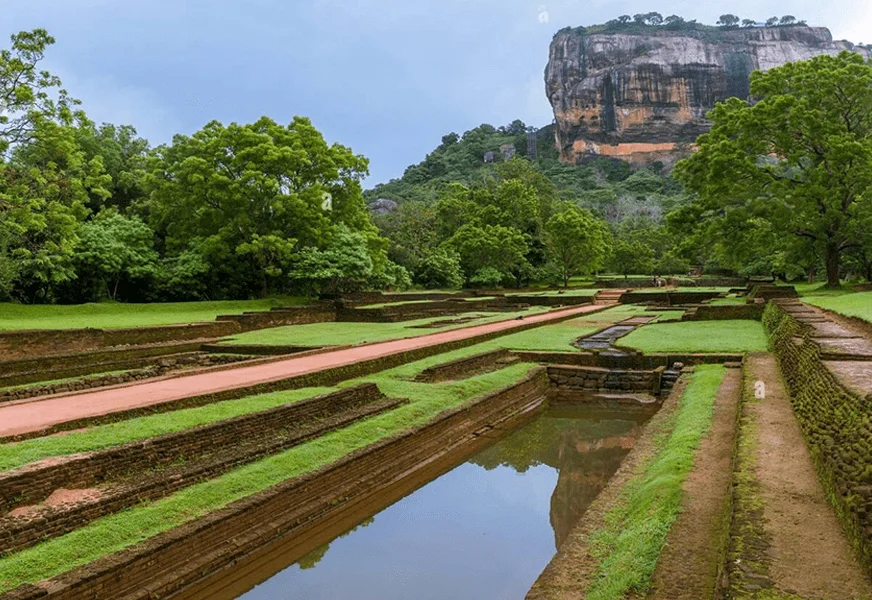
The ancient water gardens, featuring hydraulic systems still functional today.
Ascending the Citadel
The climb begins moderately, but soon you reach the famous Mirror Wall Originally polished so highly that the King could see his reflection, it is now covered in ancient graffiti (known as Sigiri graffiti)—poems and comments written by visitors as far back as the 7th century. The final ascent starts at the Lion's Paw Terrace, a massive brick and plaster structure that was once the mouth and forelegs of a gigantic lion statue, serving as the gateway to the final summit.
The Celestial Maidens (Frescoes)
Hidden within a sheltered pocket of the rock face are the renowned Sigiriya Frescoes. These vibrant, original 5th-century paintings depict female figures, often referred to as 'Celestial Maidens' or 'Apsaras.' Their origin and meaning are debated by historians, but their non-religious nature and unique artistic style make them an invaluable piece of global art history. Photography is generally restricted in this area to preserve the delicate paintings.
The Palace on the Peak
Reaching the 1.6-hectare summit, you find the ruins of Kashyapa's upper palace. Here, you can see the foundations of the royal residence, various chambers, and large cisterns carved directly into the rock. These cisterns were strategically designed to collect rainwater, providing a year-round supply for the king and his court. The reward for the climb is the spectacular 360-degree panoramic view of the surrounding jungle and distant hills, making it clear why this location was chosen.
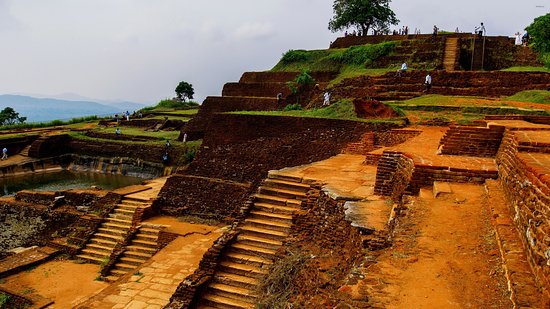
The view from the top showcases the brilliant urban planning of King Kashyapa's ancient city.