Galle Fort is arguably the best-preserved colonial sea fortress in all of South Asia. Originally built by the Portuguese in the 16th century, it was substantially fortified by the Dutch in the 17th century. This UNESCO World Heritage site is unique because it is a living, working town, housing offices, shops, cafes, and residential homes within its massive stone walls.
A Legacy of Trade and Conquest
The history of Galle Fort is inextricably linked to maritime trade routes. The Portuguese were the first to establish a fort here in 1588. However, the Dutch East India Company (VOC) captured it in 1649 and transformed it into the robust fortress we see today, complete with 14 bastions and a sophisticated drainage system. It remained under Dutch control until the British took over in 1796, but the Dutch colonial influence remains dominant in its architecture and street plan.
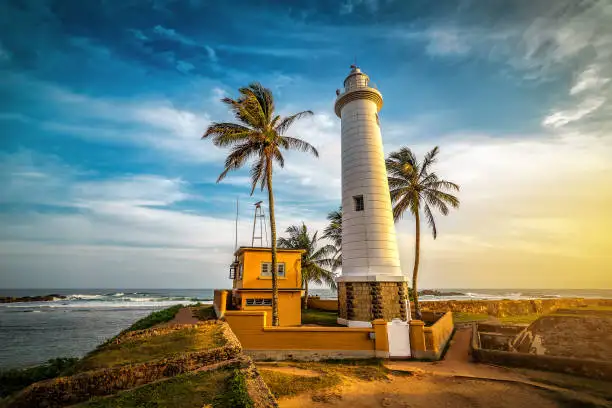
The iconic lighthouse stands near the Flag Rock Bastion, a popular spot for sunset viewing.
Architectural Wonders Within the Walls
The Fort is a stunning blend of European architectural style and South Asian tradition. Wander the narrow streets and admire the beautifully restored colonial villas, many of which now house boutique hotels and art galleries. Key architectural landmarks include the Galle Lighthouse, the Groote Kerk (Dutch Reformed Church), and the massive clock tower. The grid-like street layout makes the town incredibly easy and pleasant to explore on foot.
Sunset Strolls on the Ramparts
One of the most essential Galle experiences is walking along the massive stone ramparts, especially in the late afternoon. Here, locals and tourists gather to watch the sunset over the Indian Ocean. The Fort comes alive in the evening, with street vendors selling snacks and local fishermen casting their lines from the seawalls. Don't miss the Flag Rock Bastion, where history says the Dutch warned approaching ships of dangerous reefs.
Contemporary Charm and Local Artisanry
Despite its ancient history, Galle Fort boasts a vibrant, cosmopolitan atmosphere. The streets are lined with modern cafes, artisanal jewelry stores (Sri Lanka is famous for its gems), bookshops, and fashion outlets. This vibrant commercial and social activity makes the Fort a truly unique place where history and modern life coexist perfectly.
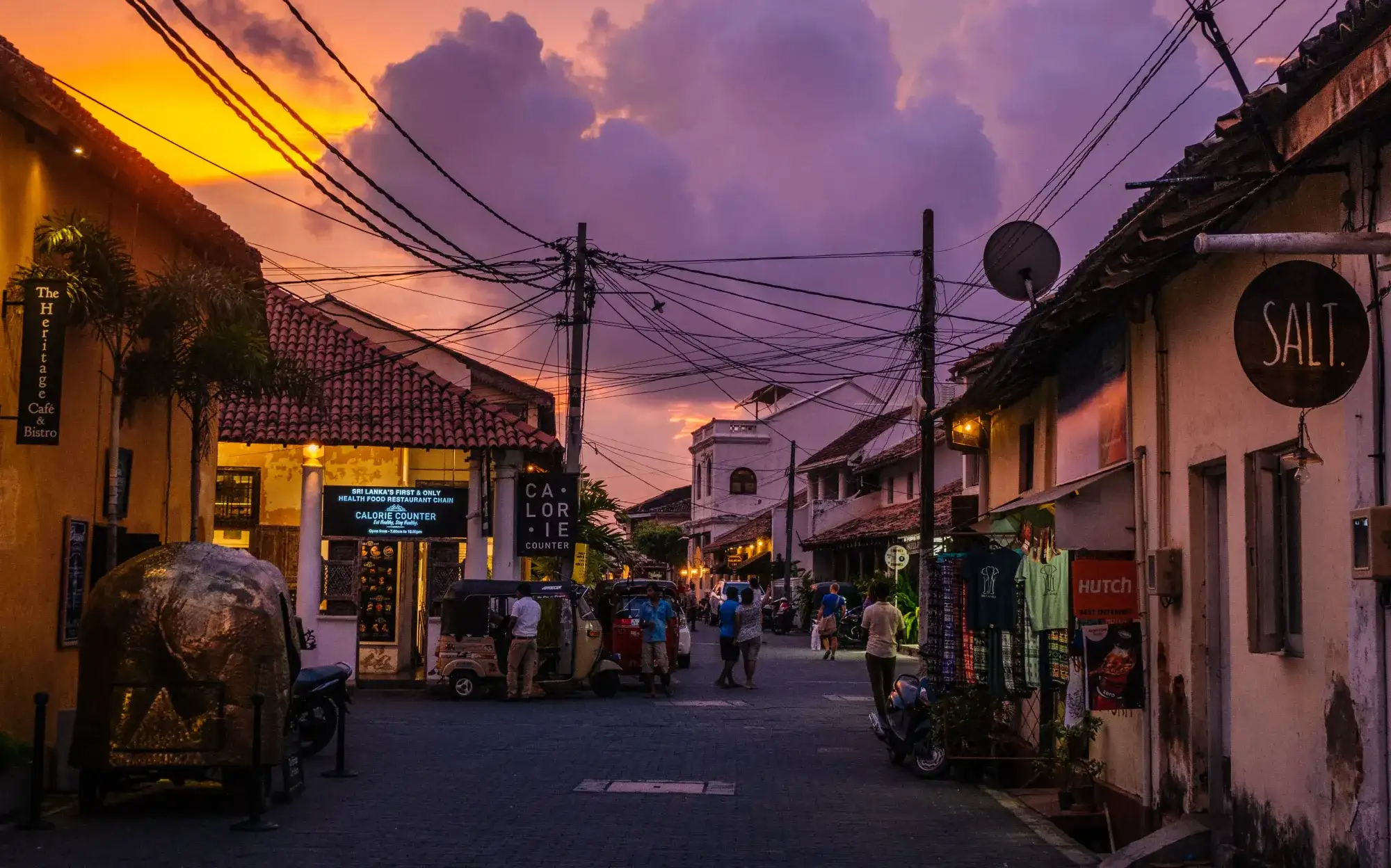
The narrow streets are perfect for walking and admiring the unique blend of colonial and local architecture.